






















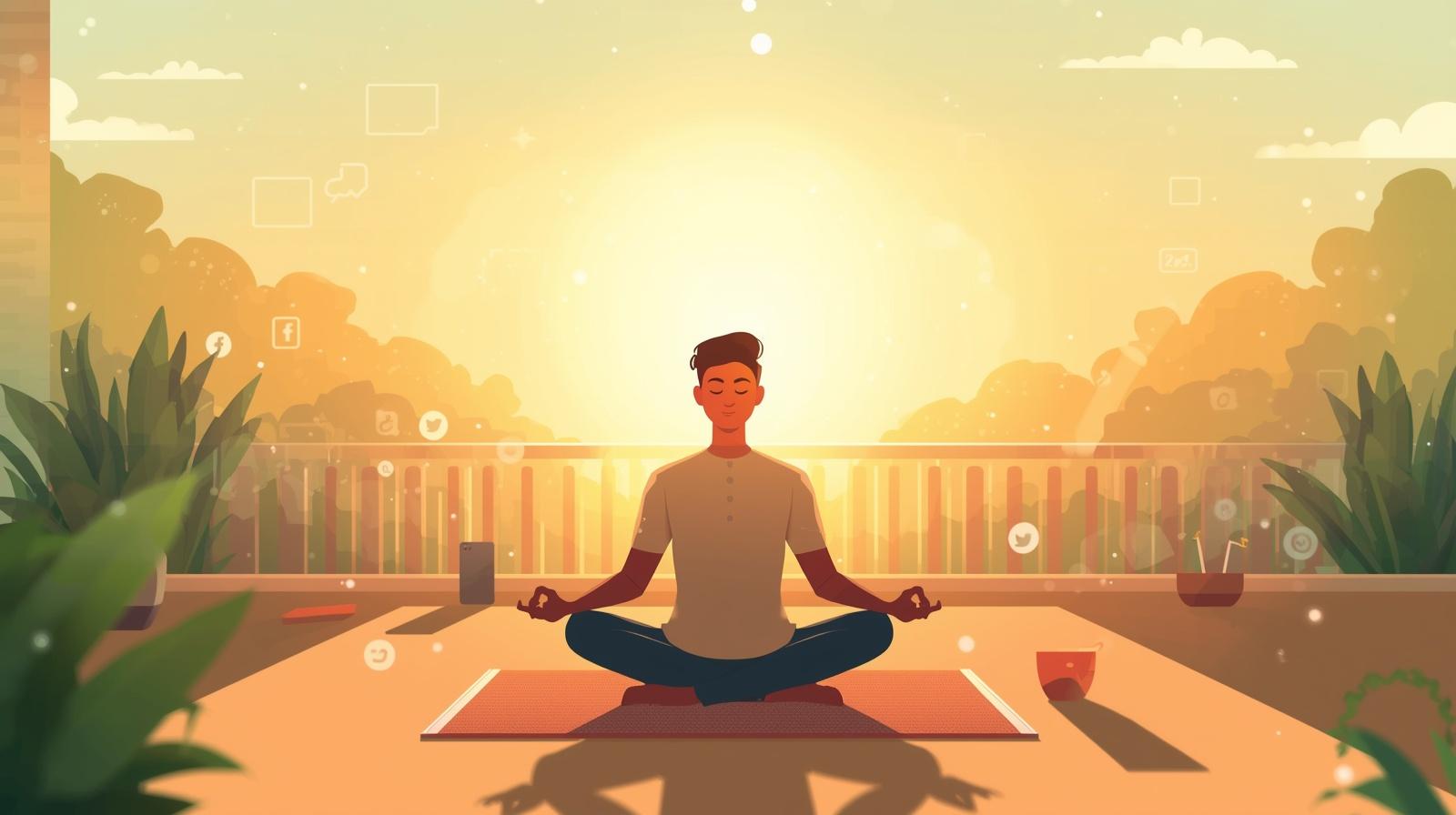

India has the world’s largest youth population — and one of its highest rates of smartphone addiction. The solution may lie in its oldest wisdom.
Scroll. Refresh. Swipe. Repeat. For millions of Indian teenagers and young adults, this is the rhythm of daily life. Between WhatsApp conversations, Instagram reels, competitive gaming, and back-to-back online classes, the average Indian youth spends 7–9 hours per day on a screen – often more than they sleep.
The consequences are no longer abstract. Anxiety, disrupted sleep, reduced attention spans, and a growing sense of disconnection from real life are reshaping an entire generation. But there is a remedy rooted in India’s own heritage: yoga combined with intentional digital detox.
Why Digital Addiction Is a Crisis Among Indian Youth
India crossed 800 million internet users in 2024, with the majority of new users being teenagers and college-going adults. While digital access has opened extraordinary opportunities, it has also created a generation that struggles to sit with silence – or with themselves.
The dopamine loop that social media platforms engineer is especially powerful among adolescent brains, which are still developing impulse control. Every notification, like, and comment delivers a micro-dose of reward that trains the brain to crave more stimulation, making focused study, creative thinking, and genuine rest feel dull by comparison.
Warning Signs of Digital Dependency
- Checking the phone within 5 minutes of waking up
- Feeling anxious or irritable when the internet is unavailable
- Difficulty reading a book or holding a conversation without distraction
- Disrupted sleep caused by late-night scrolling
- Comparing your life constantly to others on social media
- Neglecting physical activity, hobbies, or face-to-face friendships
If three or more of these patterns feel familiar, a structured digital detox — supported by yoga — can be genuinely life-changing.
What Is a Digital Detox – and Why Yoga Makes It Work
A digital detox is a deliberate period of reduced or eliminated use of digital devices. It is not about permanent avoidance of technology — that would be neither practical nor necessary in modern India. It is about reclaiming intentionality: using technology as a tool, not a reflex.
On its own, a detox can feel like deprivation. The urge to pick up the phone, to check “just once”, is powerful. This is where yoga becomes the bridge.
Yoga provides a structured practice that occupies the mind, the breath, and the body simultaneously. It gives restless hands something to do, gives the anxious mind an object of focus — the breath — and systematically calms the nervous system. Research from AIIMS New Delhi and NIMHANS Bengaluru has shown that regular yoga practice reduces cortisol levels, improves sleep quality, and strengthens attentional control — precisely the faculties that screen overuse erodes.
Yoga does not just relax the body. It trains the mind to be comfortable with the present moment — which is exactly the antidote to a culture of constant digital stimulation
Dr. Shirley Telles, Director of Research, Patanjali Research Foundation
Simple Yoga Practices for Daily Life
Basic techniques such as Nadi Shodhana, Balasana, Trataka, Bhramari, Viparita Karani, and Surya Namaskar can be practiced anywhere. These help relieve eye strain, correct posture, reduce stress, and boost energy levels. Just 15–20 minutes daily is enough to experience noticeable improvements.

Building Healthy Digital Habits
Long-term change comes from small, consistent habits. Creating phone-free zones, replacing scrolling with mindful breathing, and using technology intentionally can rewire behavior. Over time, this leads to better focus, improved mood, and reduced dependency on screens
Science Behind Yoga and Screen Fatigue
Research from Indian institutions shows that yoga reduces cortisol (stress hormone), improves sleep quality, and enhances attention span. These benefits directly address the negative effects of excessive screen time, making yoga a proven method for digital wellbeing.
Practical Approach for Students and Professionals
For students and working professionals, balance is key. Yoga helps separate productive screen use from unhealthy habits, improving both performance and mental health. With consistent practice, it becomes an effective and culturally rooted solution to manage digital overload.



FAQ
1.Do I need prior yoga experience to start a digital detox plan?
Absolutely not. The practices recommended here — pranayama, basic asanas like Balasana and Viparita Karani — are beginner-friendly and safe for almost everyone. Begin with just 10 minutes and build from there.
2.How long before I notice a difference?
Most people report improved sleep quality within 3–5 days and noticeably reduced anxiety within 10–14 days of consistent practice combined with reduced evening screen use. Focus improvements typically appear after 3–4 weeks.
3.Is this approach rooted in Indian tradition, or is it Westernised wellness?
The practices described here — Surya Namaskar, Trataka, pranayama, Yoga Nidra — are classical Indian practices documented in texts ranging from the Hatha Yoga Pradipika to the Yoga Sutras of Patanjali. They predate smartphones by several thousand years. Their application to digital wellness is modern, but their foundation is wholly Indian.
4.What if I rely on my phone for work, studies, or staying in touch with family?
A digital detox does not mean eliminating technology — it means using it with intention. The 7-day plan above preserves all necessary screen time while reducing unconscious scrolling. You can customise the screen rules to fit your actual responsibilities.
5.Are there good yoga resources in regional Indian languages?
Yes. Swami Ramdev’s Patanjali Yoga content is widely available in Hindi. Several state governments — including Kerala and Karnataka — have yoga instruction resources in regional languages. The Ministry of AYUSH also offers free resources at ayush.gov.in.


1 Comment
jl588
March 29, 2026JL588 has a decent selection of slots if that’s your thing. Pretty straightforward to use. Nothing mind-blowing, but reliable. Want to play? jl588